
Part of: Paying in Brazil
Rio’s nomad map runs along one coastline (the South Zone beach strip from Leme through Barra da Tijuca), plus two outliers worth knowing. Santa Teresa sits on a hill above it all and is best treated as a day trip, not a month-long base. Urca is a quiet peninsula at the foot of Sugarloaf. Centro and the North Zone are where you go for a market or a museum, not where you unpack a suitcase; they’re not covered here as places to live.

Every Rio guide owes you an honest safety picture before the neighborhood breakdown. The city’s violent-crime numbers have been trending the right way in recent years, but the crime a visitor is actually likely to run into isn’t violence: it’s opportunistic theft, a phone lifted off a café table or snatched out of a hand on the beach. Policing along the main Zona Sul beach corridor has been stepped up, but none of that makes every block interchangeable. The notes below flag what’s specific to each neighborhood.
Where to base
Ipanema, for the classic month
Rio's most polished beach neighborhood: walkable, with the best café and coworking density among the beach bairros and the Sunday hippie fair at Praça General Osório. One of the safer-feeling beach bairros, but keep your phone in a pocket on the sand and the boardwalk; snatch-and-grab theft is the real, everyday risk. Pay the premium if the classic Rio month is what you came for.
Leblon, for quiet and budget allowing
Ipanema's calmer, pricier next-door neighbor, with heavier private security, quieter nights, and two of the city's best botecos, Bracarense and Jobi, a short walk apart. Widely cited as one of Rio's safest bairros. The trade is energy: fewer people out late, a thinner nomad social scene, and the highest rents in the city. Base here if budget isn't the constraint and calm is the priority.
Copacabana, for energy over polish
The postcard crescent, and the most tourist-trafficked stretch of the Zona Sul: cheaper than Ipanema or Leblon, well-connected by metro, busy round the clock. Petty theft runs higher here than the neighborhoods on either side, concentrated on the crowded central blocks, and locals don't walk the beachfront alone after midnight. Good for a first landing if you want to be in the middle of things and don't mind the edge.
Botafogo, Rio's actual nomad center
Where remote workers actually cluster: dense and urban, with the city's best coworking options (WeWork, Spaces, Regus, independents) and some of the strongest food-to-dollar value in the Zona Sul. No real beach of its own; it's a 15-to-20-minute commute to Copacabana, or that same walk to Flamengo, for sand, and the street life runs intense enough that some first-timers find it a rough landing. Base here to work, not to lounge.
Flamengo, the value pick
Residential and tree-lined, facing Flamengo Park's long green space, with Botafogo and the food options around Catete and Glória close by. There's no real swimming beach (the bay water quality is poor), and some blocks near Glória and Catete feel rougher after dark. Base here for Zona Sul walkability at a lower price than Ipanema or Leblon.
Urca, for quiet at the far end
The smallest, quietest neighborhood in the city, a peninsula at the foot of Sugarloaf, with a single entrance that keeps through-traffic out. Widely called one of the safest parts of Rio. What you give up is scene: a handful of restaurants, no real swimming beach, and a short ride to wherever the action actually is. Bar Urca's sunset is the reason most visitors find this neighborhood at all.
Barra da Tijuca, Rio's spread-out suburb
A modern, 30-to-45-minute-out beach suburb, considered one of the safest areas of the city, with a long clean beach and coworking already in place. The trade is geography: you're apart from Centro, Santa Teresa and the nightlife of Ipanema or Lapa, and daily life leans more car-dependent than anywhere else on this list. A better second-time pick than a first month.
Santa Teresa, worth a visit, not a base
Genuinely unique by day: cobblestones, the yellow tram, artist studios, real distance from the beach-grid feel of the rest of the city. Be blunt with yourself about after dark: police patrol only the main tram route during operating hours, and the unmonitored side streets carry a real robbery risk after dark. Come for a meal or an afternoon. Don't sign a month here unless you're fully taxi-to-your-door at night.
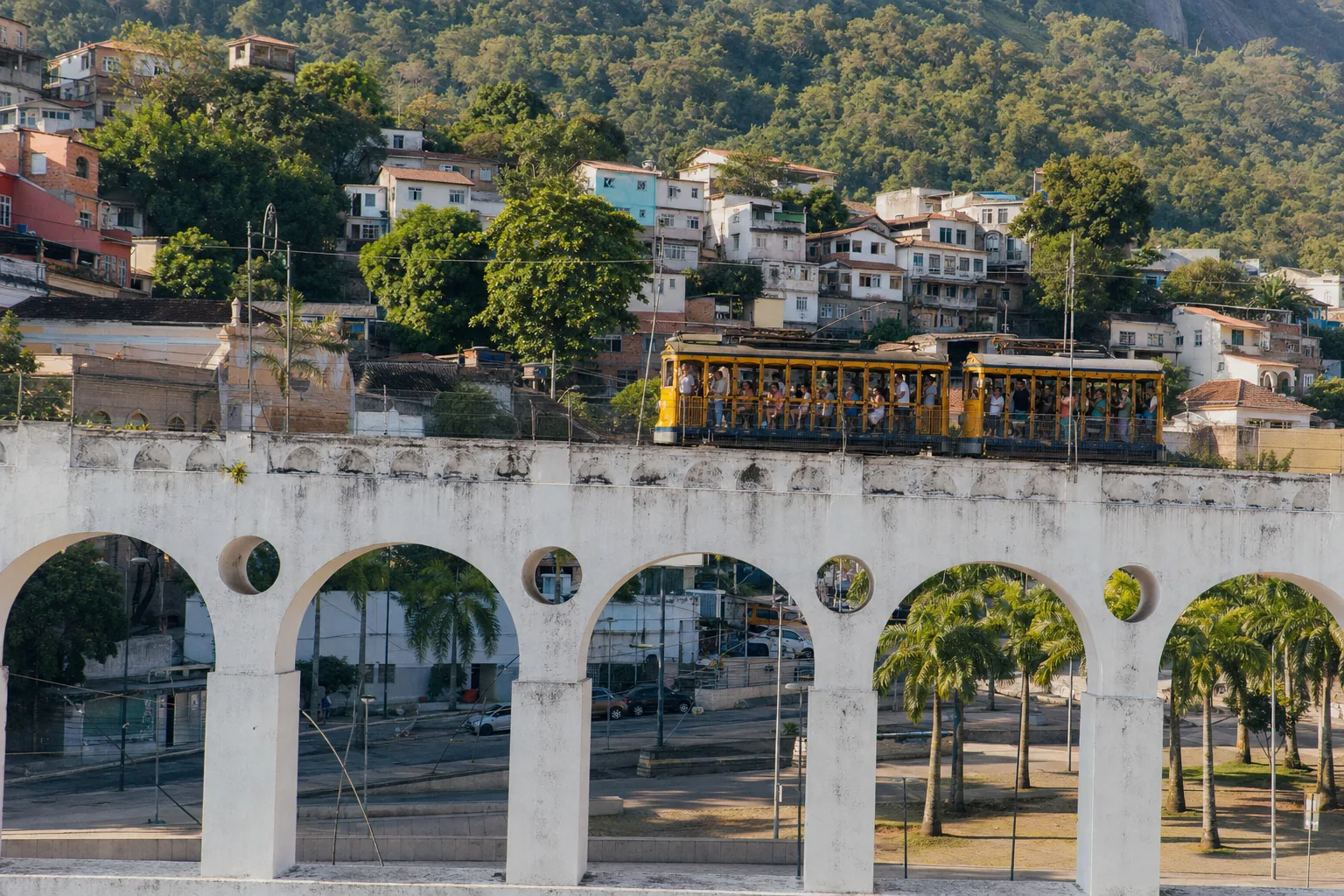
Rio isn't one neighborhood with a view. It's eight, and the view is the only thing they agree on.
Mistakes to avoid
Picking by beach view alone
Ipanema's postcard costs the most and Botafogo has no beach of its own, but Botafogo is where the coworking and the food value actually are. Decide whether you're here to lounge or to work before you decide by the view.
Walking Copacabana's beachfront alone after midnight
The daytime crescent and the after-hours boardwalk are two different places. Locals don't walk it alone late for a reason; stick to a ride app or a group after dark, same as any big coastal city.
Signing a month in Santa Teresa without an Uber budget
The daytime version of this neighborhood is wonderful. The after-dark version needs a door-to-door taxi every single time. If that's not the trip you want to plan around, treat it as a visit, not a base.
Keeping your phone out on the beach or boardwalk
Phone theft is common across the city, and it's concentrated exactly where a nomad spends the most time: the beach, the boardwalk, a café table. Pocket it, don't sit it on your towel.
Common questions
Which neighborhood for a first trip?
Ipanema, most of the time. It's walkable, well-served by cafés and coworking, and one of the easier, safer-feeling landings Rio offers. Botafogo is the other reasonable default if you're here to work more than to lounge: it has the city's best coworking density and puts the beach a short ride away rather than at your door.
Is Copacabana safe?
By day, yes, and policing along the main Zona Sul beach corridor has been stepped up. The honest caveat is the beachfront after dark: locals don't walk it alone late, since that's where organized group theft concentrates, and petty theft generally runs higher here than in the calmer neighborhoods either side. Stick to well-lit, busy stretches at night and you'll have the same experience as everywhere else in the Zona Sul.
Should I base a month in Santa Teresa?
Probably not. By day it's genuinely one of the most atmospheric neighborhoods in Rio: cobblestones, the yellow tram, real 'escape the beach grid' character. But police only patrol the main tram route during operating hours, and the unmonitored side streets carry a real robbery risk after dark. Visit for a meal or an afternoon and taxi door-to-door once the sun's down; save the month-long lease for somewhere with an easier after-dark picture.
Beach strip or Botafogo, if I actually need to work?
Botafogo. It's Rio's real center of gravity for remote workers (WeWork, Spaces, Regus and independent coworking options, plus some of the best food-to-dollar value in the Zona Sul), even though it has no proper beach of its own. Ipanema and Leblon have coworking too, but Botafogo is built around the desk first and the sand second, which is the trade a working month usually wants.
Is Barra da Tijuca worth the distance?
If you've already done a first Rio trip, maybe. It's modern, spread out, considered one of the safest parts of the city, and has a long clean beach with coworking in place, but it sits 30 to 45 minutes from the classic Zona Sul, and daily life there leans more car-dependent than anywhere else on this list. Good second-time pick; a harder first month, since you're geographically apart from most of what makes Rio Rio.